Rail and Safari8 min
Fifteen Days Without Wifi
You will not enjoy the first afternoon. This is worth knowing in advance, because almost nobody does.
There is no wifi on Rovos Rail. There is no television. There is a dress code for dinner that is enforced pleasantly but is genuinely enforced. The train leaves Pretoria and for the first four or five hours a carriage full of extremely capable adults sits in a state of low-grade agitation, reaching for phones that have nothing to tell them.
I have now done this journey twice and both times the pattern was identical. Afternoon one: restless. Day two: reading, badly, without absorbing much. Day three: something gives.
What day three does
By the third day you have run out of small talk. This is the mechanism, and it is the entire value of the trip. A mother and daughter travelling with us last season had, by their own account, been circling the same unspoken conversation for a decade. Fifteen days on a train with nothing to hide behind dealt with it somewhere around Zimbabwe.
The observation car at the back is open to the air. You sit there in the late afternoon watching a country go past at forty kilometres an hour, which is exactly the speed at which a landscape becomes legible rather than a blur. You start noticing things. Somebody points out a village. Somebody else has been reading about it. This is how the days go and it is very difficult to explain to anyone who has not done it why it is not boring.
Getting off
The genuine surprise is how reluctant you are to leave the train. Everybody says this. You have spent a fortnight in a routine you did not design, in a space small enough to be knowable, and getting off into an airport is a jolt.
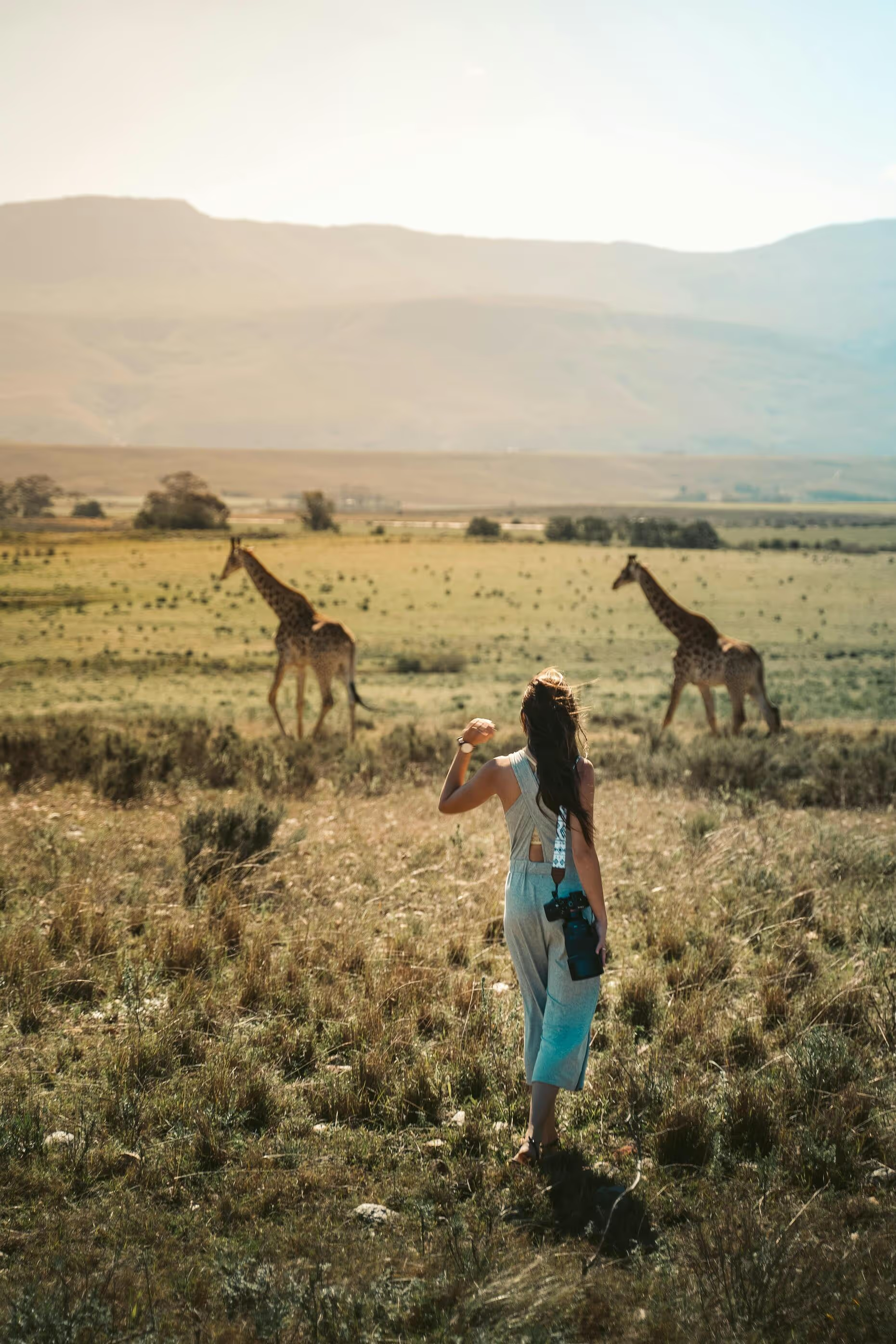
Then you are under canvas in the Serengeti, and that is a different kind of quiet altogether. Our camp was mobile, which is the only way I would do it now: canvas that moves with the herds rather than a permanent lodge that the herds have to be driven towards.
The migration passed about two kilometres out at dawn on our second morning. Our guide, who is one of the best I have worked with anywhere, said almost nothing for twenty minutes. He was not being enigmatic. He had simply decided that we would notice more if he was quiet, which was correct, and which is a quality I would now rank above almost any other in a guide.
The practical part
Book the Royal Suite if the budget reaches. It is genuinely twice the cabin and on a fifteen-day journey that arithmetic matters more than it would on three nights.
Do the rail leg first and the camp second, not the other way round. The train slows you down and the safari is enormously better for it. Arriving at a camp straight off a long-haul flight means spending the first two days catching up with yourself.
And do not go in the wet season because somebody told you it is cheaper. It is cheaper for a reason, the roads are the reason, and the reason is not negotiable.
Written by the Red Camellia team. Every trip we write about is one we have taken ourselves.